
AI gold rush has a dress code: steel-toe boots
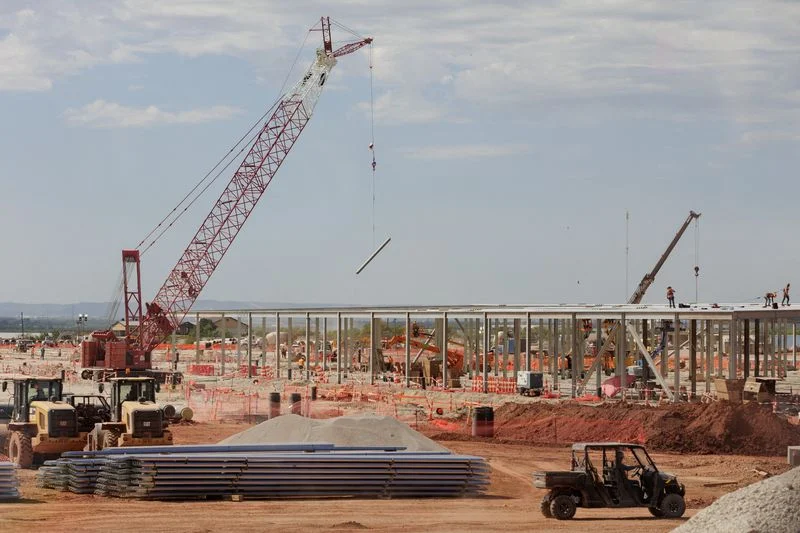
NEW YORK, Sept 15 (Reuters) – Not every company profiting from the AI boom is a chipmaker. Some, for instance, sell cowboy boots.
Boot Barn, a U.S. retailer primarily known for western apparel, reported Tuesday that an increasing portion of its large workwear orders is linked to data-center construction.
The brand has long supplied boots in bulk to oil-and-gas and construction companies seeking to equip entire crews. Today, "more and more often, those are data centers," CEO John Hazen said during the Goldman Sachs Global Consumer and Retail Conference in New York.
The company now monitors the progress of nearby data-center projects to decide which boot types to carry in local stores—a sign of how AI-related spending is spreading well beyond Silicon Valley and altering economic fortunes more broadly.
Boot Barn, which sells western and work boots through almost 600 stores, has recorded comparable sales growth in its work-boot segment for five straight quarters. The company did not immediately respond to a request for comment about revenue growth figures connected to data centers.
U.S. construction employment has risen modestly this year, propelled by labor demand for data-center construction. The sector added 22,000 jobs in August, according to the Labor Department.
Rising demand for workwear highlights the enormous scale of the data-center expansion under way in the U.S., even as some AI executives have lately called for caution about how quickly the technology is advancing and communities increasingly resist the energy and water needs of new facilities.
"When they’re clearing dirt, we need regular work boots. When they’re building the four walls, we are looking at steel-toe work boots," Hazen said.
Workwear manufacturer Brunt Workwear is experiencing a comparable trend. The company told Reuters that some of its strongest demand originates from California and Texas, two states drawing some of the largest AI infrastructure investments.
CEO Eric Girouard said Brunt Workwear is "pushing hard" to keep up with demand tied to data-center construction.
Read also
Musk pledges affordable Starlink pricing in India days before Ambani's record Jio IPO
Elon Musk said he would price Starlink's satellite internet affordably in India to challen…
Read More
HSBC names eight emerging markets to watch in 2027
HSBC has picked eight emerging equity markets it favours for 2027, citing artificial intel…
Read More
Foreign Investors Exit South Korean Stocks as AI Enthusiasm Fades
South Korea’s equity market is seeing heavy foreign outflows and a steep drop in trading a…
Read More