
Analysis-Fearless US stock market vulnerable to shocks as midterms loom
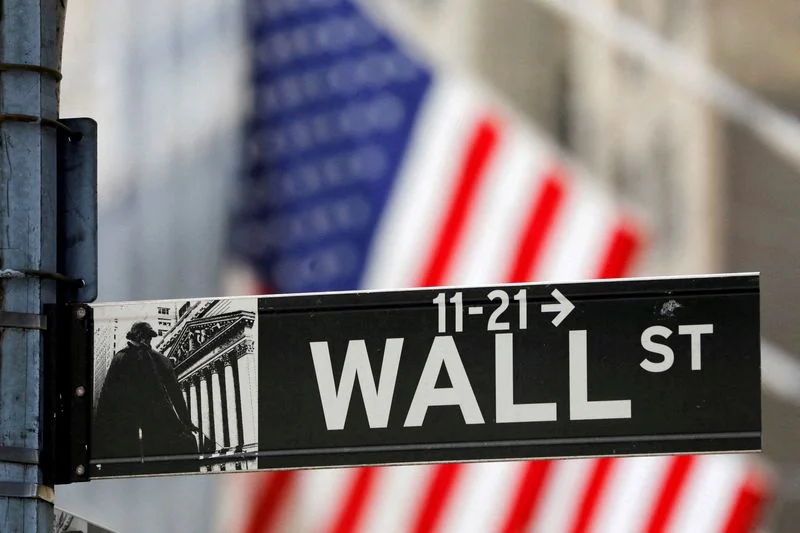
In New York, September 9 (Reuters) - With U.S. midterm elections two months away, options markets are exhibiting a dangerous combination of fragility and overconfidence, leaving some analysts concerned that markets lack the resilience to absorb a sudden shock.
Even amid recent bond market turbulence, stocks remain close to record highs, volatility indicators sit near 2026 lows, and equity market correlations are approaching record lows, implying shares are trading more independently than is typical.
Although analysts do not expect the voting itself to trigger a major market response, the weeks leading up to the November 3 contest could prove turbulent.
As election day approaches, investor attention may turn to uncertainty about which party will control Congress and what that means for policy, along with the possibility of a divided or fragile government—scenarios that could fuel volatility, analysts said.
Based on past patterns, the September-October period before midterm elections is often rocky for equities, as markets come out of the normally quiet summer and investors begin focusing on political risk.
A Cantor Fitzgerald analysis found that the S&P 500 declined 5% or more during September-October in 15 of the 24 midterm election years since 1930.
But that historical tendency is not visible in volatility futures pricing.
The Cboe Volatility Index, a widely followed options-derived measure of investor unease, recently notched its lowest reading this year. At roughly 15, the VIX stands below its long-term median of 17.6. VIX futures also appear sedate, reflecting investor confidence that healthy earnings will keep supporting equities.
“The VIX curve is not expressing any premium for midterm elections,” according to Michael Purves, chief executive officer of Tallbacken Capital Advisors.
A host of potential market-moving events lies ahead in the next two months—including inflation and jobs data, a Federal Reserve policy meeting, and a late-September U.S. visit by Chinese President Xi Jinping—culminating in the elections.
The elections carry direct consequences for markets, according to some analysts. A Reuters/Ipsos poll found that Democrats now hold a notable advantage over Republicans among voters regarding which party is better equipped to handle the cost of living—an unwelcome development for President Donald Trump and his fellow Republicans.
If Democrats manage to take the House of Representatives, the transition from unified control of the White House and Congress under Republicans to divided government would likely increase market uncertainty, Evercore ISI lead equity and quantitative strategist Julian Emanuel said in a research note.
Emanuel added, “A Senate flip would magnify the dynamic.”
The market’s apparent fearlessness, alongside several sentiment indicators—including crowded positioning, tight credit spreads, and little demand for downside protection—shows that investors are unprepared for any unforeseen shock.
UBS’s machine-learning indicator “Turbu-lens,” which projects market vulnerability over the next month, registered its highest potential level of market stress at the end of August.
“It’s been basically screaming, extreme fragility for the last several weeks now,” said Maxwell Grinacoff, UBS’s head of U.S. equity derivatives research.
He went on: “If you’re driving a go-kart with no seatbelt down the highway at 100 miles an hour, you may get from A to B unscathed ... but if someone hits you, that’s not going to be very good.”
So far, equities have not been rattled by rising geopolitical tensions or a sharp selloff in bonds, but analysts warn that there is very little room for error.
“The system right now is not expecting any kind of shock,” observed Olivier d’Assier, SimCorp’s head of investment decision research for Asia Pacific.
For some investors, the relatively calm mood surrounding the midterms is justified. They argue that, regardless of the outcome, steady earnings and strong economic growth should continue to support stocks.
“The equity market here has been driven by one thing and one thing only, which is earnings,” Purves said, adding that midterm election outcomes are unlikely to dent earnings or weaken stock demand.
Furthermore, investors who have bought hedges in recent months have seen little payoff.
“In the last three years, if you shorted the market, you lost money ... so there is also a reluctance to try it again,” commented SimCorp’s d’Assier.
Even so, with volatility at current low levels, investors seeking protection until the elections might find options prices appealingly cheap.
“The overall level of market implied volatility is compellingly cheap when compared to the risks engendered by the midterm elections,” Evercore ISI’s Emanuel commented.
Read also

Musk pledges affordable Starlink pricing in India days before Ambani's record Jio IPO
Elon Musk said he would price Starlink's satellite internet affordably in India to challen…
Read More
HSBC names eight emerging markets to watch in 2027
HSBC has picked eight emerging equity markets it favours for 2027, citing artificial intel…
Read More
Foreign Investors Exit South Korean Stocks as AI Enthusiasm Fades
South Korea’s equity market is seeing heavy foreign outflows and a steep drop in trading a…
Read More