
Analysts Say Capital Injections in Chinese Insurers Could Boost Stock Investments
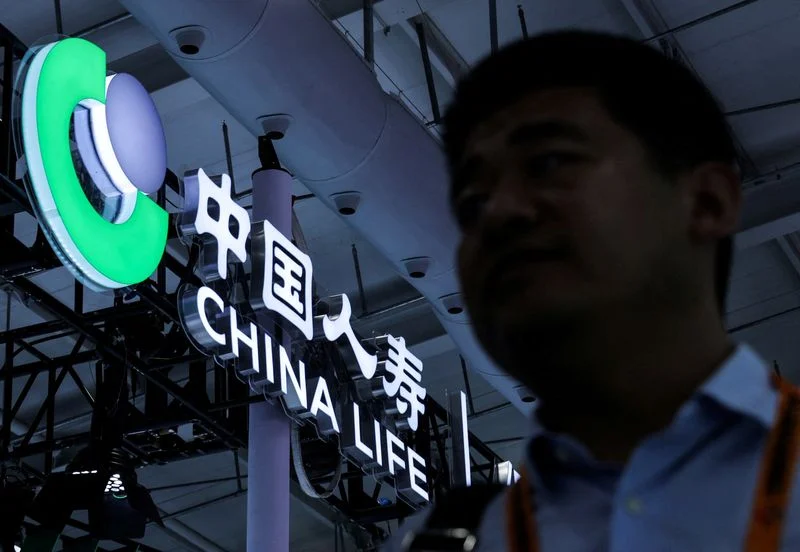
On Sept 7, analysts said Beijing's plan to inject capital into big state-owned insurers is expected to relax capital constraints and ease solvency pressures that have held back insurers from investing more long-term funds into the stock market.
On Sunday, five state-owned insurers and three banks announced plans to raise up to a combined 360 billion yuan ($53.6 billion) through capital injections from the Ministry of Finance and other shareholders.
According to state-run Xinhua News Agency, the Ministry of Finance said it would issue 300 billion yuan in special bonds to finance the capital injections.
This would mark China's first use of special bonds to support insurers, expanding a financing mechanism that had previously been reserved for state-owned banks.
The recapitalization may strengthen state insurers, which have been directed to back the stock market with medium- and long-term funds, while also enabling them to assist regulators in overseeing smaller, higher-risk insurance companies.
Gary Ng, senior economist for Asia-Pacific at Natixis, said the state-led injection would make it easier for insurers to purchase equities and meet solvency requirements. He noted that Beijing has required insurers to invest 30% of new premiums into stocks since the start of last year.
According to Ng, equities accounted for just 21% of assets at five major listed mainland insurers as of the end of 2025.
Analysts at Zhongtai Securities said in a research note that the fresh capital would, in the short term, ease pressure on solvency ratios—particularly core solvency—which have been adversely affected by a decline in government bond yields used to value liabilities.
They added that over the medium term, the move removes a constraint on insurers increasing long-term equity investments, and in the long run, it strengthens the capital base of state-owned insurers.
The capital injection for insurers has arrived earlier than expected. In March, the finance ministry announced it would issue special bonds to recapitalize banks, and many market participants had predicted that support for insurance groups would not materialize until 2027.
In total, five state-owned insurers are slated to receive 70 billion yuan in capital from the ministry.
China Life Insurance (Group) Co said it would receive 35 billion yuan, and China Taiping Insurance Group said it would receive 7 billion yuan. PICC Group, for its part, plans to raise up to 15 billion yuan through a private placement of A-shares to the finance ministry.
Citi analysts noted in a report that the size of the state insurers' recapitalization is considerably less than the 200 billion yuan the market had previously anticipated.
They said the downsized package underscores the healthier capital positions of Chinese insurers, indicating an overall lower urgency for aggressive capital replenishment.
On Monday, China's insurance stocks declined, however, as some investors cautioned against overinterpreting the development and instead focused on the potential dilution of earnings.
The CSI Founder Fubon Insurance Theme Index dropped 2.1%, and the Hang Seng Composite Index – Financials slipped 0.9%, while the broader CSI300 blue-chip index gained 0.2%.
Charles Wang, chairman of Shenzhen Dragon Pacific Capital Management Co, said the move does not necessarily translate into more money flowing into the real economy, and investors need to monitor what other stimulus measures may follow.
Read also
Musk pledges affordable Starlink pricing in India days before Ambani's record Jio IPO
Elon Musk said he would price Starlink's satellite internet affordably in India to challen…
Read More
HSBC names eight emerging markets to watch in 2027
HSBC has picked eight emerging equity markets it favours for 2027, citing artificial intel…
Read More
Foreign Investors Exit South Korean Stocks as AI Enthusiasm Fades
South Korea’s equity market is seeing heavy foreign outflows and a steep drop in trading a…
Read More