
As Apple prepares to make a splash, a brief history of foldable phones
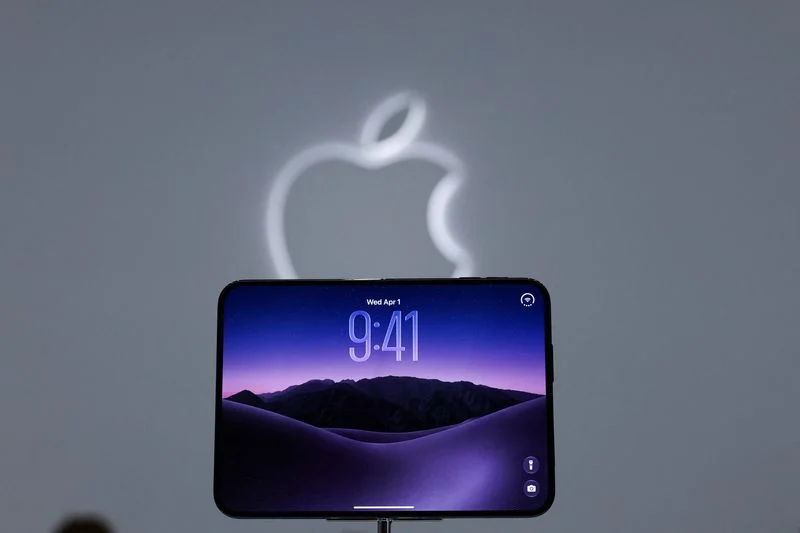
Reuters reported Sept. 9 that while the first iPhone in 2007 brought touch-screen technology into the mainstream years after its invention, Apple is now betting that its debut foldable device can achieve similar success for a format that has remained niche despite lengthy efforts by Samsung and Chinese competitors including Huawei.
Scheduled for launch later Wednesday at Apple's Cupertino campus, the foldable iPhone represents one of the most drastic changes ever to the company's flagship product line, which contributes about half of Apple's total revenue and helped turn it into a global technology leader.
Although foldables command attention thanks to their large displays, they have only managed to secure a single-digit portion of global smartphone sales, held back by shortcomings such as lesser camera quality, reduced battery life, and a visible crease at the center of the screen when the phone is unfolded.
Analysts note that Apple has historically exploited the second-mover advantage, learning from rivals' errors, and is now expected to profit from supply-chain and technological advancements that have made foldables more robust and less likely to show creases.
Samsung's current Galaxy Fold 8, for instance, uses a design that has greatly minimized the crease, a result of years of investment in the technology.
Ahead of Apple's event, here's a brief look at how foldables evolved.
2018–2021: Early struggles and a major Samsung misstep
Foldable phone concepts have been around for decades, but China's Royole is usually credited as the first to ship one, in 2018. Its FlexPai, which featured a 7.8-inch outward-folding display, was widely dismissed for glitchy software and basic plastic hinges.
Months later, Samsung raised reliability and pricing concerns with the $2,000 Galaxy Fold, the sector's first true mass-market product. Some reviewers, including Marques Brownlee, encountered broken screens, and several peeled away a protective layer that looked like a removable screen protector but actually was not, in an episode called 'foldgate.' Samsung postponed the release and rounded up all sample units.
During the same period, manufacturers pursued very different form factors. Samsung's Galaxy Fold folded inward to open into a small tablet, while Motorola in late 2019 revived its iconic Razr as a clamshell that closed a full-size phone in half.
Huawei's Mate X, also launched in 2019, folded outward, wrapping a single display around the device's exterior. Microsoft, on the other hand, chose to skip foldable screens in 2020 and instead linked two separate displays with a hinge in the Surface Duo; that product line has since been discontinued.
2022–2026: A slow march toward the mainstream
Google's entry came in 2023 with the Pixel Fold, priced at $1,799 and shaped like a passport; its wider, shorter screen opened into a display approaching a mini-tablet. In the meantime, Samsung and its Chinese competitors made gradual refinements until the next big milestone emerged in 2024 with tri-folds.
Huawei introduced the first tri-fold in September 2024 for $2,800; the phone folded like an accordion and instantly became a top seller. Samsung shipped its own multi-folding handset in December 2025.
At present, Samsung accounts for about 40% of the worldwide foldable market, while Huawei holds 30%, according to Counterpoint Research.
The passport-style form has, however, become a key dividing factor.
Google gave up that layout after 2023, but Samsung has used it for at least one of its newest handsets. Apple is predicted to go with the passport shape because it suits video and entertainment consumption more than the taller, book-oriented design intended for productivity.
That wider aspect ratio more closely matches the standard dimensions of most video, cutting down on the black bars that appear around content on taller book-style foldables.
Analysts say Apple's participation will speed the category's expansion, and IDC forecasts foldable shipments will advance nearly 30% this year compared with a projected contraction of nearly 1.4% for conventional smartphones.
Tarun Pathak, Counterpoint's research director, said in a statement: "Apple's entry will surely increase competition at the premium end. However, foldables are still a very small part of the overall smartphone market, so there is room for the category to grow well beyond current volumes."
Read also

Musk pledges affordable Starlink pricing in India days before Ambani's record Jio IPO
Elon Musk said he would price Starlink's satellite internet affordably in India to challen…
Read More
HSBC names eight emerging markets to watch in 2027
HSBC has picked eight emerging equity markets it favours for 2027, citing artificial intel…
Read More
Foreign Investors Exit South Korean Stocks as AI Enthusiasm Fades
South Korea’s equity market is seeing heavy foreign outflows and a steep drop in trading a…
Read More