
Asian equities steady as chipmakers recover from Nvidia leadership jolt
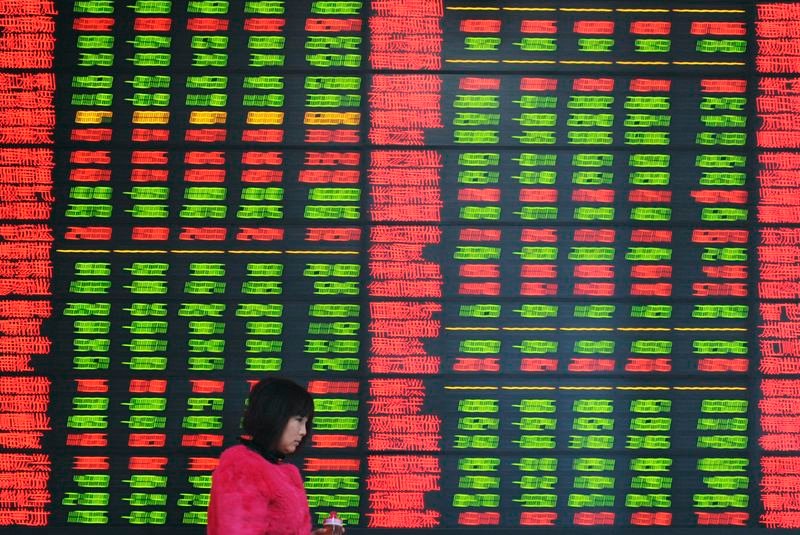
Asian equities recovered some lost ground on Friday as investors shifted focus from Nvidia's turmoil back to technology stocks, buoyed by fresh confidence in the artificial-intelligence trade and robust demand for semiconductor infrastructure.
The MSCI Asia Pacific index climbed 0.7%, led by technology shares. Nasdaq 100 futures added 0.1% and S&P 500 futures rose 0.2%, following lower closes for both underlying benchmarks on Thursday.
Sentiment also drew support from Anthropic's planned initial public offering, with demand for the shares reportedly around six times the available amount.
Nvidia shares tumbled as much as 14% on Thursday after co-founder Jensen Huang resigned, though dip-buyers trimmed the loss to 4.3% at the close.
The company confirmed that Chief Financial Officer Colette Kress would serve as interim CEO while the board seeks a permanent replacement. Nvidia shares fell another 3% in extended trading.
Asian chipmakers regain ground amid AI investor rotation
Japan's Nikkei 225 advanced 1.1% and TOPIX added 0.8%, while South Korea's KOSPI edged up 0.2%. Taiwan Semiconductor Manufacturing rose 1.3% and Largan Precision jumped 10%.
Japanese suppliers also firmed, with Kioxia up 1.7%, Sony up 1.5%, TDK up 1.4% and Murata Manufacturing up 1.2%. Samsung Electronics gained 0.5%, while SK Hynix was almost flat.
Huang's exit could carry broader consequences for U.S. chip-export policy and the AI supply chain, given his efforts to preserve access to China and his close ties to U.S. President Donald Trump.
U.S. Senate Banking Committee Chairman Tim Scott has asked Huang and Commerce Secretary Howard Lutnick to testify about the recent developments at the chipmaker.
Investors are still focused on Nvidia's third-quarter results, due on Tuesday, November 17.
China, Hong Kong tech shares face chip-access worries
Chinese and Hong Kong technology stocks stayed weaker as investors weighed how Nvidia's leadership change might affect Chinese companies dependent on its processors, along with the risk of tighter U.S. restrictions on access to advanced chips via offshore data centres.
Hong Kong's Hang Seng fell 0.9%, while the CSI 300 slipped 0.1% and the Shanghai Composite added 0.2%. MiniMax dropped 4.9%, Z.AI fell 7.4%, Tencent lost 2.6% and Kuaishou declined 3.1%. Foxconn Industrial Internet fell 5.6%, and Alibaba shed 0.6%.
Wider U.S.-China national-security tensions are adding to those worries. Washington is considering banning imports of new Chinese optical transceivers used to connect equipment within AI data centres, citing fears the products could enable data theft, malware installation or service disruption.
Bets on domestic substitution provided some support for Chinese chipmakers: SMIC rose 1.44%, NAURA Technology gained 1.13% and Cambricon advanced 1.24%.
Elsewhere, Australia's S&P/ASX 200 fell 0.6%, New Zealand's NZX 50 lost 0.5% and Singapore's STI declined 0.7%. India's Nifty 50 Futures were little changed.
Markets fully priced a quarter-point Fed increase next month and assigned a 14.5% probability to a half-point move, up from zero a week earlier.
Brent traded near $96 a barrel after gaining 3.3% on Thursday, when Houthi attacks on Saudi energy infrastructure and risks to shipping through the Strait of Hormuz heightened supply concerns.
Prices later eased after Trump said Washington could proceed without a deal with Iran, adding another layer of uncertainty to the regional supply outlook.
Read also

Citigroup misrecorded trades at European unit, understated risk by $35 billion, Reuters reports
Citigroup incorrectly booked trades at a European subsidiary, understating risk-weighted a…
Read More
Senate Republicans vote down Iran war powers measure
The Republican-controlled Senate rejected a war powers resolution that would have required…
Read More
Sources: Bank of America banker Stewart Barry set to join Allen & Company
Stewart Barry, Bank of America's vice chairman of global technology investment banking, is…
Read More