
Asian stocks rally; Taiwan jumps 9% as AI trade revives
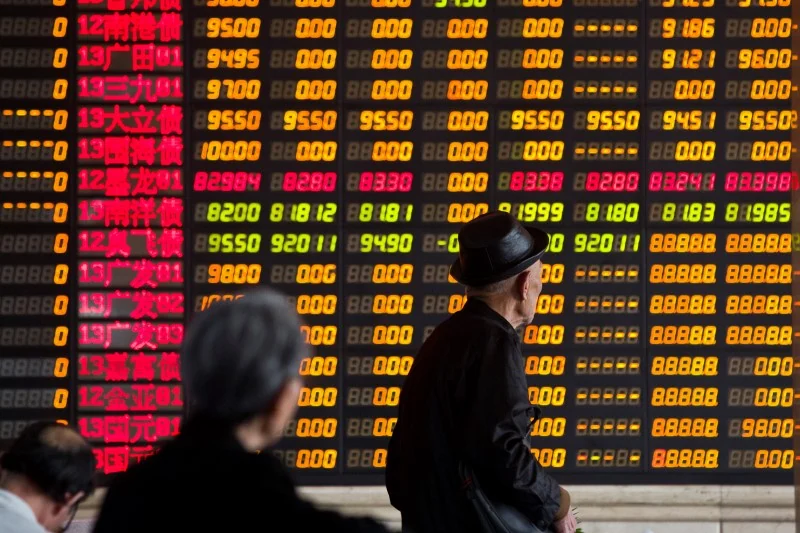
Most Asian equities advanced on Tuesday, with Taiwan posting the region's biggest gain as Nvidia's reinstatement of founder Jensen Huang rekindled appetite for the artificial-intelligence trade after last week's technology-driven selloff.
Wall Street posted its strongest session since April 2025: the S&P 500 gained 4.7%, the Dow 3% and the Nasdaq Composite 6.5%; the Nasdaq 100 rose 6.9% and the Philadelphia Semiconductor Index added 14%.
Nvidia jumped 31.5%, its largest one-day increase in 23 years, adding nearly $1 trillion in value after climbing as much as 36%. The rally followed Friday's correction in the S&P 500 and Dow and the Nasdaq's worst weekly loss since March 2020.
Nvidia's board unanimously reinstated Huang as president, CEO and director, reversing its refusal less than a week earlier. It cited U.S. government input in concluding that his return posed no national-security risk; Trump and Vice President JD Vance had urged his reinstatement, Reuters reported.
Huang resigned on November 12 after acknowledging an extramarital relationship, amid reports linking a Chinese businesswoman to suspected attempts to divert restricted chips to China; investigations are ongoing.
Asian markets bounce, but Taiwan remains below its recent high
Taiwan's Weighted Index surged more than 9%, South Korea's KOSPI rose 7.1% and Japan's Nikkei 225 gained 4.1%. Nasdaq 100 futures edged up 0.1% and S&P 500 futures added 0.2% during Asian trading, after giving back much of Monday's surge.
MSCI's Asia-Pacific index excluding Japan climbed 4.6%, its largest daily advance since July 31, rebounding from an eight-month low and ending an eight-session decline that had brought it close to bear-market territory.
TOPIX rose 2.3%, Australia's S&P/ASX 200 1.8%, New Zealand's NZX 50 2.1% and Singapore's Straits Times Index 0.9%. Hong Kong's Hang Seng added 0.3%, China's CSI 300 1% and the Shanghai Composite 0.8%.
Markets in India were closed for a public holiday.
Taiwan's rally came after a 17.5% weekly drop, the steepest since 1991. Despite Tuesday's leap, the TAIEX was still roughly 20% below its 52-week high of 49,968.92 and remained down 10.1% over one week and 19.9% over one month.
Huang's departure unsettled an AI ecosystem reliant on Nvidia for chips and financing, as investors questioned whether debt-funded data-centre spending could justify valuations. Meanwhile, Anthropic fell 8.5% on its second trading day after a weak debut.
Chip stocks rally as investors re-enter AI trade
Chipmakers and suppliers of components, testing equipment, switches, cables and power infrastructure led the rebound. TSMC gained 9.9%, Foxconn 8.1% and Largan Precision 9.9%.
MediaTek and Delta Electronics each rose 10%. SK Hynix added 8.9%, Samsung Electronics 8.5%, Kioxia 8.2%, Murata 14.9% and Advantest about 15%.
Risks persist around AI supply-demand imbalances, data-centre delays, costs and regulation.
Brent traded near $89.50 after falling 3.5% on Monday. Treasury yields rose, with the 10-year at 4.94% and the two-year at 4.69%; the dollar approached a 19-month high against the euro and the yen weakened.
Markets priced a December Fed rate increase as virtually certain, up from 89% on Friday, while the chance of a 50-basis-point move was about 5%.
Investors awaited U.S. consumer confidence data on Tuesday, Wednesday's PCE inflation, income and spending figures and revised third-quarter growth, ahead of Thursday's Thanksgiving break and December's final Fed meeting.
Read also
Advantest shares jump 14% as Asian chip stocks rally on Nvidia CEO news
Advantest rose 14.0% to ¥27,645 as Asian semiconductor stocks rallied after Nvidia's board…
Read More
TSMC Shares Hit Limit-Up as Nvidia CEO Reinstatement Fuels AI Rally
TSMC shares climbed 9.9% to TWD 2,230 and hit limit-up after Nvidia's board reinstated Jen…
Read More
Australia sets 5% global revenue fines in revised internet safety bill
Australia's communications minister says Google, Meta and other tech firms could face fine…
Read More