
Defense Stocks Slide as Democratic Midterm Win Raises Pentagon Budget Fears
Corrects the spelling of “Cowen” in paragraphs 6 and 7.
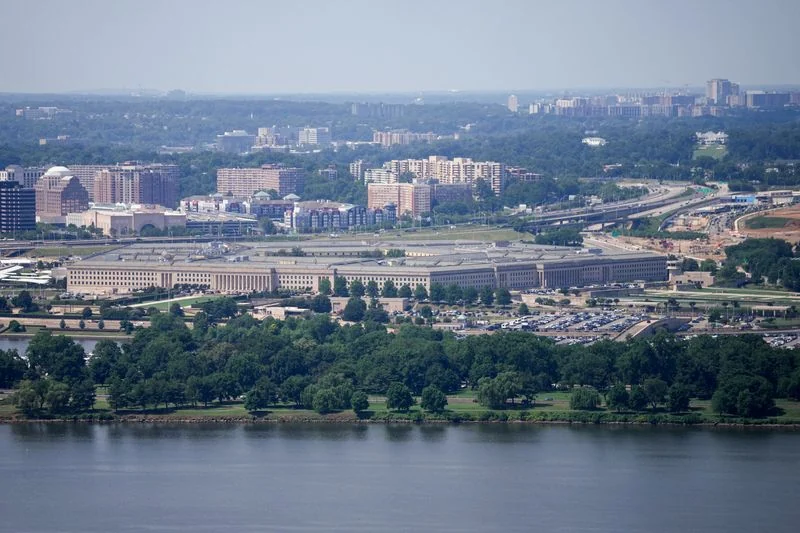
Nov 4 (Reuters) - Shares of US defense companies declined on Wednesday after Democrats’ strong midterm election victory intensified worries that the Pentagon’s spending plans could come under greater pressure.
The sector had benefited from President Donald Trump’s proposal for a $1.5 trillion US military budget for 2027 — far above the $901 billion currently approved — and from the Iran war, which has driven demand for missiles, air-defense systems and other weapons.
With Democrats poised to control Congress, investors wagered that future defense funding might be less robust than previously anticipated. Lockheed Martin, which runs the largest US weapons program, the F-35 fighter jet, fell 6.9%. Missile and radar maker RTX slipped 3.1%, and L3Harris Technologies dropped 6.9%. General Dynamics and Northrop Grumman also declined.
Analysts said a House led by Democrats could impose greater scrutiny on defense budgets and new programs, even if backing for military modernization remains broadly intact.
Jefferies analysts said in a note that they expect the 2027 defense budget to be nearer the House’s roughly $1.15 trillion proposal than the administration’s $1.5 trillion request.
“Trump-branded programs are dead,” TD Cowen analyst Roman Schweizer said in a note, referring to programs including Golden Dome, the homeland missile-defense shield, and the Golden Fleet, a new Trump-class battleship and modernization program. Shares of Navy shipbuilder Huntington Ingalls Industries were down 4.9%.
According to TD Cowen, the defense programs “least at risk” were nuclear modernization efforts such as Northrop’s B-21 bombers and the Sentinel intercontinental ballistic missile (ICBM) replacement program.
Companies including RTX and Lockheed reported strong quarterly results in October and record backlogs as governments sought to replenish stockpiles and strengthen military readiness.
Since then, however, the sector’s shares have surrendered much of those gains as investors became doubtful that such spending increases would materialize.
Including Wednesday’s declines, the S&P 500 Aerospace & Defense sub-index is down nearly 1% this year, while the Dow Jones US Aerospace & Defense sub-index has fallen 3.4%.
Read also
U.S. futures flat after tech-led rebound; CPI report in focus
U.S. equity futures were little changed Monday evening after Wall Street's tech-driven ral…
Read More
White House taps Palantir's LoSapio to lead Homeland Security cyber agency
The White House has nominated Palantir chief information security officer Michael LoSapio…
Read More
Nvidia and CEO Jensen Huang face shareholder lawsuit over alleged concealment of ties to suspected Chinese spy
Nvidia and CEO Jensen Huang were sued in a proposed class action alleging they hid Huang's…
Read More