
FAA ground stop lays bare aging U.S. air traffic systems despite billions in upgrades
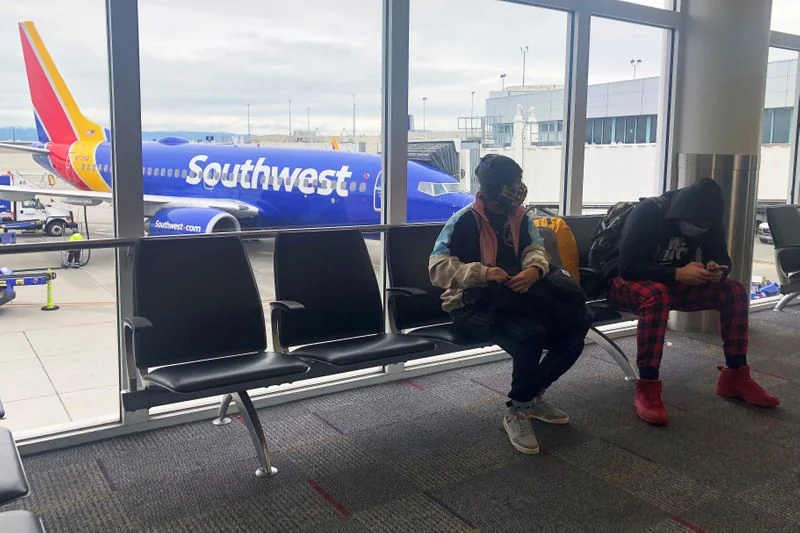
The nationwide flight halt that disrupted U.S. air travel on Friday has deepened worries about the Federal Aviation Administration's aging communications infrastructure, revealing vulnerabilities in a network already the subject of a multibillion-dollar modernization effort.
Transportation Secretary Sean Duffy linked the outage to overloaded switches and routers in the FAA's legacy telecommunications network, though what caused the equipment overload is still not clear.
The FAA ended its nationwide ground stop after more than four hours, but Duffy cautioned that returning operations to normal would take time.
Airlines scrubbed more than 1,000 flights and delayed nearly 10,000, according to FlightAware.
Aviation analytics firm Cirium estimated that about 1.5 million passengers had been scheduled to depart U.S. airports on roughly 11,000 flights after 4 p.m. Eastern Time.
The disruption came as the White House sought an additional $30.1 billion for aviation infrastructure, including $10.1 billion earmarked for air traffic control modernization.
In July 2025, Congress approved $12.5 billion to replace aging telecommunications, radar and other aviation systems.
Still, long-standing infrastructure weaknesses have gone unresolved.
A 2024 Government Accountability Office review found that 51 of the FAA's 138 air traffic control systems were unsustainable, while another 54 were potentially unsustainable.
The agency has moved 68% of its legacy copper telecommunications network to high-speed fiber, but officials have cautioned that new cables alone will not remove systemic vulnerabilities.
Recent failures have shown the risks. A September outage that hit Philadelphia air traffic facilities disrupted about 9,500 flights after problems affected both primary and backup communications links.
The FAA plans to finish the first phase of its modernization effort by December 2028.
The GAO has cautioned that poor scheduling and unreliable cost estimates could postpone upgrades, leaving the agency dependent on obsolete infrastructure for longer.
Read also

Citigroup misrecorded trades at European unit, understated risk by $35 billion, Reuters reports
Citigroup incorrectly booked trades at a European subsidiary, understating risk-weighted a…
Read More
Senate Republicans vote down Iran war powers measure
The Republican-controlled Senate rejected a war powers resolution that would have required…
Read More
Sources: Bank of America banker Stewart Barry set to join Allen & Company
Stewart Barry, Bank of America's vice chairman of global technology investment banking, is…
Read More