
Goldman Sachs maintains neutral stance amid market shifts

Goldman Sachs disclosed in a Tuesday report that it continues to hold a tactically neutral stance on a three-month horizon, while retaining a modestly pro-risk posture over the next 12 months.
According to the bank, Friday's US jobs data surpassed consensus forecasts: nonfarm payrolls increased by 162,000 in August. Revisions pushed employment growth higher, while the unemployment rate remained unchanged at 4.1%. The figures strengthened market pricing for a rate increase in September, even as the White House continued to advocate for lower borrowing costs.
Ahead this week are US producer and consumer price readings, along with central-bank decisions such as the European Central Bank's policy meeting.
The global procyclical rotation in markets persisted through the summer aided by stronger nominal growth, though its pace has since moderated. Commodities outperformed, led by European natural gas and refined products on tensions near the Strait of Hormuz. Grains registered one of the largest cross-asset swings, while agricultural commodities broadly delivered strong gains.
Goldman Sachs flagged that an intense "Super El Niño" event could augment food-price inflation via supply disruptions in concentrated agricultural sectors, especially sugar, while potentially reducing strain on European gas inventories if mild temperatures persist.
Broad equity indices stayed mostly range-bound, yet the composition of market leadership changed significantly. Energy was the top-performing sector, while Financials and Health Care stood out as the strongest non-energy groups.
Sovereign bonds around the world came under pressure, with long-dated yields approaching levels not seen since the global financial crisis, led by increases in real yields. The selloff was fueled by solid nominal growth, fiscal worries, and crowding-out effects from debt issuance tied to artificial-intelligence investments.
Gold climbed even as US 10-year real yields moved higher. Interventions by the US Treasury in foreign-exchange markets and long-dated Treasuries raised demand for haven assets, including gold, the Swiss franc and Bitcoin. In currencies, the Korean won also appreciated sharply.
Single-name implied volatility surged to a record 2.9 times the market's implied volatility in mid-July, then started to revert toward normal levels. The VIX has stayed relatively contained in the face of growing macroeconomic challenges.
The bank advises pairing global artificial-intelligence exposure with high-dividend and low-volatility strategies. After August's volatility repricing, it sees compelling hedging opportunities in Momentum collars, VIX call spreads, EUR/CHF puts, and downside protection on Financials, Energy and TOPIX, combined with call options on the KOSPI.
This article was produced with AI assistance and reviewed by an editor. Further details are available in our Terms and Conditions.
Read also
Musk pledges affordable Starlink pricing in India days before Ambani's record Jio IPO
Elon Musk said he would price Starlink's satellite internet affordably in India to challen…
Read More
HSBC names eight emerging markets to watch in 2027
HSBC has picked eight emerging equity markets it favours for 2027, citing artificial intel…
Read More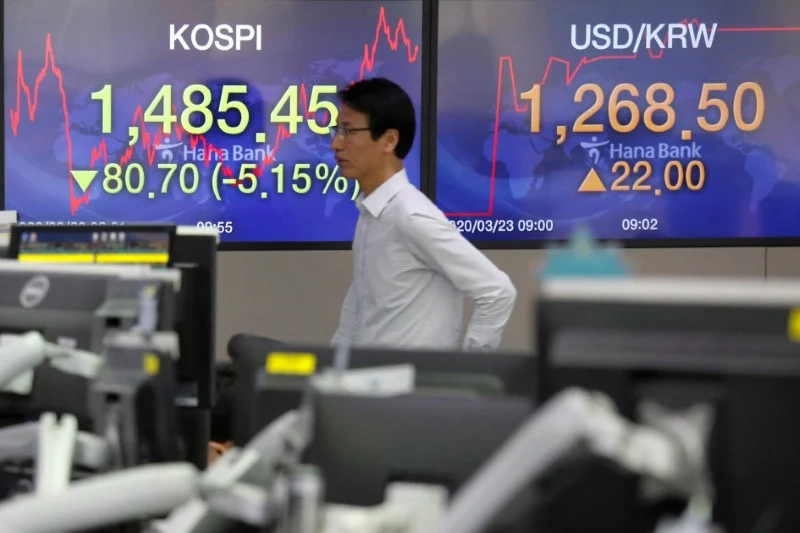
Foreign Investors Exit South Korean Stocks as AI Enthusiasm Fades
South Korea’s equity market is seeing heavy foreign outflows and a steep drop in trading a…
Read More