
How Volkswagen Forged a Historic Job-Cut Deal Amid Fear and Compromise
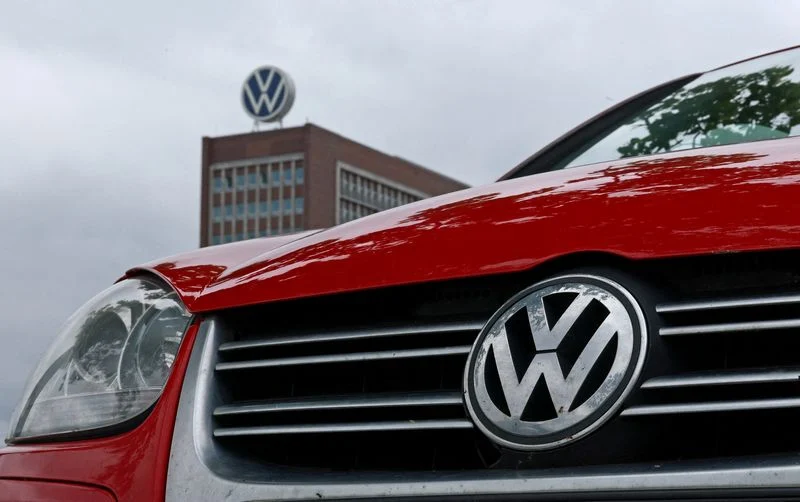
At a tense Wednesday afternoon meeting in Volkswagen’s Wolfsburg headquarters, three of the automaker’s most powerful figures met to forge an improbable agreement as the embattled company hurtled toward full-blown crisis.
Chief Executive Oliver Blume, seeking approval for historic job reductions that could affect up to 100,000 employees, held closed-door discussions with Supervisory Board Chairman Hans Dieter Poetsch and Olaf Lies, the state premier of powerful Lower Saxony—a major shareholder and the heartland of Volkswagen’s domestic manufacturing operations.
The three, together with labor representatives, were determined to prevent the so-called nuclear option of an extraordinary general meeting should the supervisory board challenge the management board’s plans—an outcome that would have triggered protracted and harmful legal disputes.
Their compromise ultimately led the supervisory board to approve an ambitious overhaul—the most extensive restructuring in the group’s 89-year history—while averting a confrontation among key stakeholders.
Europe’s largest automaker, Volkswagen, which employs more than 650,000 workers, is seeing its profit margins erode amid competitive pressure from Chinese rivals and tariffs imposed by U.S. President Donald Trump. The company must reduce costs and boost efficiency in order to survive.
Given the strong opposition from Lower Saxony and unions to job cuts—and the threatened closure of four German plants—an agreement once appeared remote. Investors worried that Volkswagen was “unfixable” and would spiral into a dangerous, expensive deadlock.
‘The Damage Would Have Been Unimaginable’
According to four sources familiar with Wednesday’s discussions, the management board had coalesced the previous day behind a hardline stance, threatening to convene an emergency shareholder meeting that could circumvent the supervisory board to push through job cuts—and possibly spin off certain divisions, thereby undercutting other centers of power.
The sources said the management board made clear it would take the drastic step of calling an extraordinary general meeting if the supervisory board—where union representatives and Lower Saxony held a majority—rejected its proposals.
That threat—the sources’ so-called nuclear option—set the stage for Wednesday’s compromise, as participants increasingly recognized that a failure to reach an agreement could inflict greater damage than the proposed job cuts, with litigation lasting years and further weakening Volkswagen.
“The damage would have been unimaginable if there hadn’t been a solution,” one of the four sources said.
That ultimatum, combined with an initial gathering of senior stakeholders in Hanover on Tuesday, laid the groundwork for Wednesday’s breakthrough. Blume, Lies, and Poetsch—Volkswagen’s former finance chief who is now CEO of its largest shareholder Porsche SE—began sketching the framework of an accord, aware that time was short.
One source said they were later accompanied by Daniela Cavallo, the influential leader of Volkswagen’s works council, and Christiane Benner, head of IG Metall—Germany’s largest union—who also serves as the company’s deputy chair.
Under the proposed accord, the sources explained, Volkswagen would receive backing for job reductions while effectively shelving—at least for now—the idea of creating independent legal entities for its passenger-car and component operations.
The sources added that Lower Saxony, which stood to lose influence under the original arrangement, consented to this approach; labor representatives were subsequently brought into the discussions to align on the broader recovery strategy.
Unions Promised to Fight Job Cuts With ‘All Our Might’
That proved no simple task. Just days earlier, IG Metall—Germany’s most powerful union, which represents Volkswagen’s German workforce—had vowed to resist any job cuts “with all our might.” Lower Saxony, Volkswagen’s second-biggest shareholder, had likewise objected to the plan to eliminate 50,000 positions, and CEO Blume had suffered defeat in a similar vote in July.
By Thursday morning, according to the sources, the compromise was finalized. Volkswagen moved up the scheduled supervisory board meeting by one day, and investors were caught off guard by the unanimous vote in favor of the turnaround plan; shares, which had fallen to a quarter of their level five years earlier, rebounded.
Spokespersons for Volkswagen’s supervisory board, its works council, and the state of Lower Saxony all declined to comment.
Blume has consistently maintained that there is no viable alternative to workforce reductions if he is to revive the world’s second-largest carmaker, which—like competitor Stellantis—has excess production capacity in Europe.
Elsewhere in the industry, traditional car manufacturers such as France’s Renault have already undergone restructuring, while Nissan of Japan is currently executing its own painful overhaul, including plant sales and delays to future models.
The fate of Volkswagen’s plants in Emden, Zwickau, Neckarsulm, and Hanover remains unresolved. Possible options include redirecting these sites to new business activities or selling them so they can remain viable after vehicle production is discontinued over the coming decade.
Yet the board’s vote is no miracle cure. The officially sanctioned job cuts must still be negotiated with labor unions, leaving open the possibility of strikes at Volkswagen facilities throughout Germany. Difficulties ranging from Chinese competition to tariff pressure also remain unresolved.
“The uncertainty will remain,” one of the sources said. “And it will only disappear once Volkswagen’s executive board quickly presents concrete plans.”
Read also
Musk pledges affordable Starlink pricing in India days before Ambani's record Jio IPO
Elon Musk said he would price Starlink's satellite internet affordably in India to challen…
Read More
HSBC names eight emerging markets to watch in 2027
HSBC has picked eight emerging equity markets it favours for 2027, citing artificial intel…
Read More
Foreign Investors Exit South Korean Stocks as AI Enthusiasm Fades
South Korea’s equity market is seeing heavy foreign outflows and a steep drop in trading a…
Read More