
Huawei heads to trial in US over its business dealings in Iran
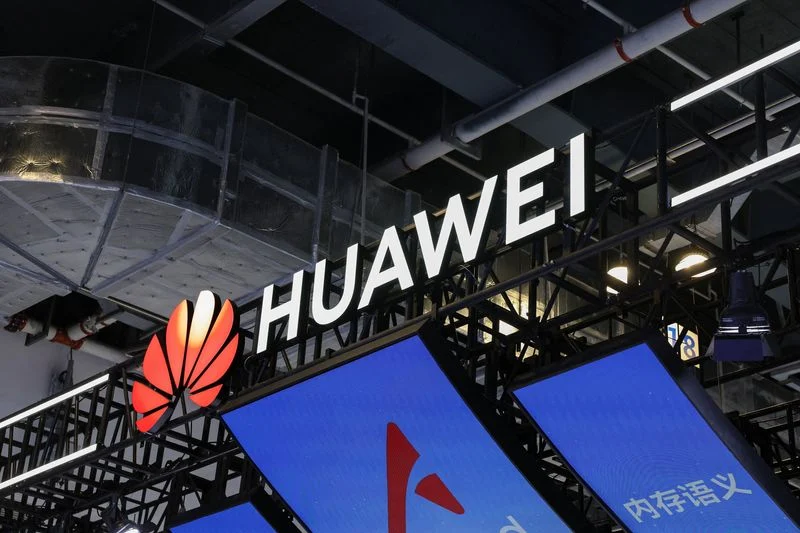
NEW YORK, Sept 8 (Reuters) - Eight years have passed since U.S. prosecutors covertly charged China's Huawei Technologies with defrauding HSBC and other banks over its Iran-related business. That case is now finally ready to go before a jury.
Huawei additionally faces allegations of conspiracy to steal trade secrets from five U.S. technology firms, along with charges it lied about its activities in North Korea and provided surveillance gear to Iran for tracking demonstrators during the 2009 anti-government rallies in Tehran. Jury selection is slated to commence on Tuesday at the federal courthouse in Brooklyn, New York.
This prosecution marks the conclusion of one of Washington's first and most heavily scrutinized legal confrontations with a Chinese firm, arriving at a time of intensifying technology rivalry between the two nations. The U.S. is increasingly focused on keeping advanced American technology out of China's military, and the conflict has expanded into fields such as artificial intelligence.
The lengthy dispute traces back to 2018, when Huawei's chief financial officer, Meng Wanzhou, was detained in Vancouver, triggering a major diplomatic rift among Washington, Beijing and Ottawa.
If Huawei is found guilty on the Iran-related counts, it would lend support to the U.S. decision to add the Chinese tech giant to a trade blacklist in 2019 over accusations that its actions posed a national security threat.
Presiding over the case is U.S. District Judge Ann Donnelly. The trial is expected to run approximately three months and may coincide with the September 24 meeting in Washington between Chinese President Xi Jinping and U.S. President Donald Trump. Prospective jurors have already completed 27-page questionnaires that probe their opinions of the Chinese and Iranian governments.
Additional accusations encompass breaching U.S. sanctions on Iran, money laundering, racketeering, wire fraud and obstruction of justice. Huawei has entered a not-guilty plea across all counts and consistently denied misconduct.
The government's case draws in part on Reuters reporting from 2012 and 2013 that detailed the close relationship between Huawei and Skycom, a company conducting business in Iran.
According to those Reuters reports, Skycom offered to sell at least €1.3 million ($1.5 million) of prohibited Hewlett-Packard computer equipment to Iran's biggest mobile operator in 2010. The articles also disclosed that Meng was a member of Skycom's board from February 2008 to April 2009. The full Reuters coverage is available for review online.
Beijing says the prosecution aims to undercut Chinese technology.
The Chinese authorities have repeatedly assailed the case as an element of a broader campaign to slow China's technological ascent. In a statement released on Saturday, a Huawei spokesperson dismissed the government’s case, saying, "The government’s overarching narrative is demonstrably false."
Nowadays, Huawei is central to China's aspirations in AI chips and has broadened its focus beyond telecom networking equipment and smartphones. The company characterizes the criminal case as an attempt to damage its competitive standing and views the trade-secret allegations as a rehash of commercial disagreements that were settled long ago.
Should a conviction occur, prosecutors intend to seek forfeiture of any assets or gains derived from the alleged illegal conduct.
The indictment originated during President Donald Trump's first term, a period when his administration also moved to restrict Huawei equipment in the United States and urged allies to exclude the Chinese company from their telecommunications networks, citing espionage risks.
The charges span alleged misconduct occurring roughly from 1999 through 2020.
According to the indictment, Huawei relied on Skycom to secure prohibited U.S. goods, technology and services for its operations in Iran, as well as to transfer funds out of the country via international banking channels.
U.S. authorities indicated that an unnamed bank—identified by Reuters through sources and documents as HSBC—processed more than $100 million in U.S.-dollar transactions tied to Skycom.
Prosecutors alleged that Meng falsely presented Huawei’s relationship with Skycom to an HSBC executive. In a later deal with prosecutors that led to the dismissal of charges against her, she acknowledged those statements were inaccurate.
Read also
Musk pledges affordable Starlink pricing in India days before Ambani's record Jio IPO
Elon Musk said he would price Starlink's satellite internet affordably in India to challen…
Read More
HSBC names eight emerging markets to watch in 2027
HSBC has picked eight emerging equity markets it favours for 2027, citing artificial intel…
Read More
Foreign Investors Exit South Korean Stocks as AI Enthusiasm Fades
South Korea’s equity market is seeing heavy foreign outflows and a steep drop in trading a…
Read More