
Taiwan Wields Chip Diplomacy as Pressure Mounts to Share AI Riches
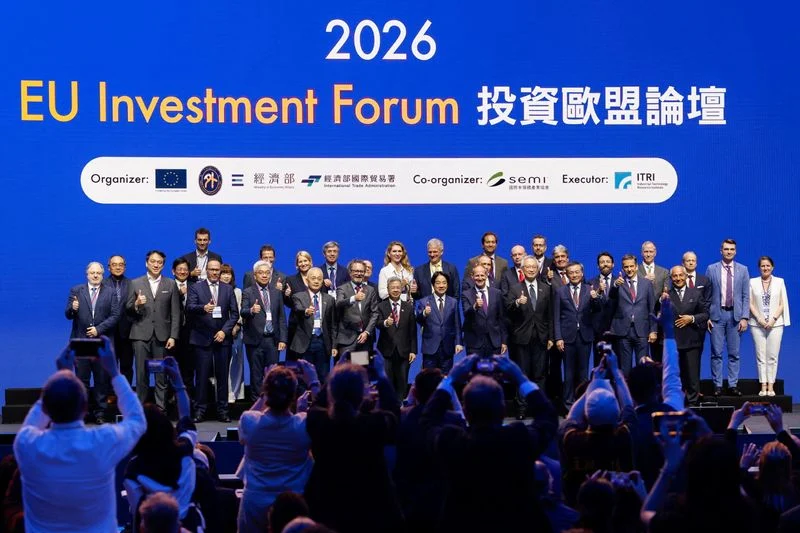
TAIPEI, Sept 7 (Reuters) - At a major trade show last week, Taiwan flexed its chip diplomacy muscle, casting itself as a democratic and dependable partner for the AI revolution and indicating a readiness to spread the gains of its semiconductor leadership among allied nations.
Home to TSMC and other companies whose chips enable AI applications, diplomatically isolated Taiwan has long leveraged its technological strengths to attract international support—something Beijing consistently tries to counter by describing the island as one of its provinces.
But Taiwan is also under pressure from the United States, its most important diplomatic backer and arms supplier, to shift more chipmaking to U.S. soil, especially as TSMC invests $265 billion in Arizona factories.
President Lai Ching-te, who unusually spoke at two separate events at the SEMICON Taiwan trade show on the same day, said Taiwanese firms are expanding globally to 'let resilience create shared prosperity' and that the island's chip strength rests on democracy and the rule of law.
Economy Minister Kung Ming-hsin, opening the U.S. pavilion at the show, said Taiwanese companies plan an additional $20 billion of investment in the United States.
Taiwan cut a deal with Washington earlier this year to increase U.S. investment in exchange for lower export tariffs, yet uncertainty remains over the arrangement.
U.S. Commerce Secretary Howard Lutnick told CNBC last week that semiconductor tariffs will be imposed on companies that do not produce chips in the U.S.
Still, Bill Frauenhofer, the Commerce Department official overseeing the tariff agreement with Taiwan, kept an upbeat tone during the event.
The 'phenomenal partnership' between Taiwan and the U.S. is working, he said. 'And we really, both of us, have vested interests in terms of making this successful.'
Taiwanese firms acknowledge the need to expand manufacturing beyond the island's borders.
Young Liu, chairman of Foxconn, Nvidia's largest AI server maker, said companies now have to 'think about how to make with Taiwan, not in Taiwan; make with Taiwan in the country where the market is.'
In response to Liu during the panel discussion, Tien Wu, chief operating officer of ASE, the world's largest chip packaging and testing provider, expressed agreement.
'Politically it is the right thing,' Wu said. 'And honestly, I don't think we have a choice not to do that.'
Europe wants investment too.
Taiwan is also seeking to deepen relations with the European Union, which similarly wants greater Taiwanese corporate investment. The EU sent European Commission official Kilian Gross to SEMICON to promote the bloc's Chips Act 2.0 to Taiwanese officials and companies.
Taiwan has pursued closer EU cooperation not only because both have strongly backed Ukraine in its war with Russia, but also because both are embroiled in trade and diplomatic disputes with China.
Deputy Foreign Minister Francois Wu, one of Taiwan's most prominent diplomats, told the opening of the French pavilion that Taiwan and France share democratic values, freedom, and a commitment to a rules-based international order.
'We use technology to connect with the world, not to control it,' he added.
Read also
Musk pledges affordable Starlink pricing in India days before Ambani's record Jio IPO
Elon Musk said he would price Starlink's satellite internet affordably in India to challen…
Read More
HSBC names eight emerging markets to watch in 2027
HSBC has picked eight emerging equity markets it favours for 2027, citing artificial intel…
Read More
Foreign Investors Exit South Korean Stocks as AI Enthusiasm Fades
South Korea’s equity market is seeing heavy foreign outflows and a steep drop in trading a…
Read More