
US appeals court skeptical of bid to curtail abortion pill access
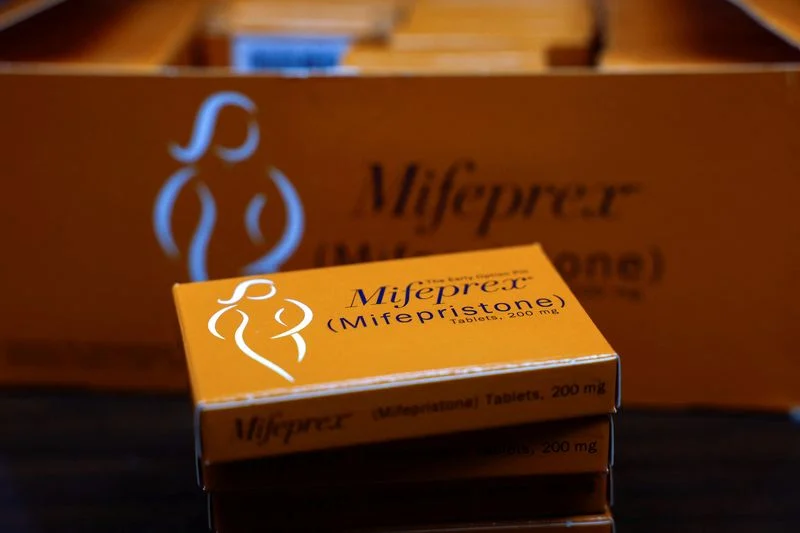
A U.S. appeals court on Wednesday appeared skeptical of a Louisiana-led effort to restrict access to the abortion drug mifepristone by invalidating a 2023 rule that allowed the medication to be prescribed via telemedicine and mailed nationwide.
Louisiana Solicitor General Ben Aguinaga pressed a three-judge panel of the New Orleans-based 5th U.S. Circuit Court of Appeals to strike down the rule, asserting that it undercuts abortion bans enacted by his state and others after the U.S. Supreme Court overturned the constitutional right to the procedure in 2022.
Aguinaga said there is no dispute that Louisiana experiences 1,000 abortions a month due to mifepristone mailed into the state.
Louisiana sued the U.S. Food and Drug Administration last year, claiming the agency ignored risks of serious adverse effects linked to mifepristone, including sepsis and hemorrhaging, when it adopted the 2023 rule under former Democratic President Joe Biden and removed a requirement that the drug be dispensed in person at a medical facility.
Back before the 5th Circuit.
That reasoning persuaded another 5th Circuit panel earlier this year to temporarily block the rule, but the Supreme Court vacated that order in May, allowing the drug to continue to be prescribed through telemedicine and dispensed by mail—a point U.S. Circuit Judge Stephen Higginson noted repeatedly.
Higginson observed that his court, one of the most conservative in the nation, had also been overruled by the Supreme Court in 2024, when the justices unanimously rejected a separate bid by anti-abortion groups and doctors to roll back FDA regulations that had eased access to the drug.
Higginson and fellow Democratic appointee U.S. Circuit Judge Dana Douglas both questioned whether Louisiana had legal standing to sue over the FDA's action, suggesting the state could not establish that the abortions occurring there were caused by the 2023 rule rather than by other factors.
Higginson said there were potentially too many independent actors to conclude that the government's safety assessment was causing the state's 1,000 monthly abortions.
If the panel rules against Louisiana, the state could appeal to the Supreme Court or ask the full 5th Circuit—where Republican appointees hold a supermajority—to reconsider the case, which is one of several pending challenges to the regulation.
Restricting access to mifepristone, including its availability through telehealth appointments with out-of-state providers, has been a top priority for Republican-led states that implemented abortion bans.
Nearly half of U.S. states have banned or severely restricted abortion since the Supreme Court's ruling, leading to a surge in medication abortion, a two-drug regimen consisting of mifepristone followed by misoprostol.
Medication abortion accounts for more than 60% of U.S. abortions, according to data from the Guttmacher Institute, an abortion rights advocacy group.
In April, U.S. District Judge David Joseph paused the case while President Donald Trump's administration reviews the safety of mifepristone.
Abortion rights advocates have said the Trump administration's review is politically motivated and unnecessary. The FDA, which approved mifepristone in 2000, calls the drug, used by millions of American women, safe and effective, saying its periodic reviews have not identified any new safety concerns.
U.S. Department of Justice attorney Daniel Winik said the review remains ongoing. He said he had "no idea" what action the FDA might ultimately take, but that the matter should be left to the agency to decide.
Winik said the whole point of the government's position is that it is the FDA's job, during its ongoing consideration of mifepristone, to address all such issues.
The panel's only Republican appointee, U.S. Circuit Judge Priscilla Richman, repeatedly asked about how much more frequently women were being admitted to emergency rooms and "how many of those complications would not have occurred had the woman seen a physician in person."
Lawyers for mifepristone manufacturers GenBioPro and Danco Laboratories, however, called the drug safe and argued that the FDA adequately assessed its risks when it issued the 2023 rule.
GenBioPro lawyer John Elwood told the panel that the FDA's decision was amply supported.
Read also
Musk pledges affordable Starlink pricing in India days before Ambani's record Jio IPO
Elon Musk said he would price Starlink's satellite internet affordably in India to challen…
Read More
HSBC names eight emerging markets to watch in 2027
HSBC has picked eight emerging equity markets it favours for 2027, citing artificial intel…
Read More
Foreign Investors Exit South Korean Stocks as AI Enthusiasm Fades
South Korea’s equity market is seeing heavy foreign outflows and a steep drop in trading a…
Read More