
US seeks more access to Venezuela’s mineral wealth after tapping its oil, sources say
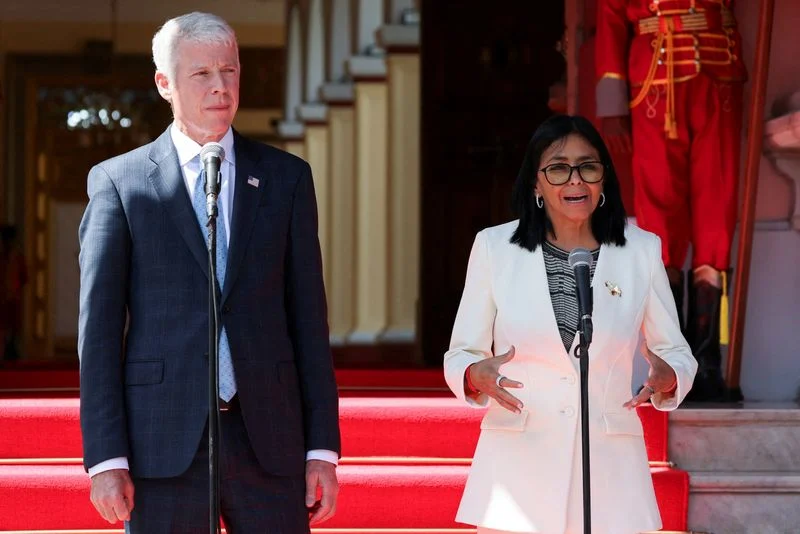
On Sept. 8, Reuters reported that the Trump administration is seeking expanded U.S. access to Venezuela's minerals, including gold, as part of a broader push to gain control and influence over the country's vast natural resources that goes beyond oil, three sources familiar with the discussions said.
The initiative, according to the anonymous sources, could open Venezuela's mining industry to U.S. investment and afford American firms access not just to oil but also to mineral supplies considered vital to national security.
The move would also extend Trump's campaign to tie Venezuela's resource wealth more firmly to U.S. strategic and economic priorities, following the U.S. military raid in January that removed Venezuelan leader Nicolás Maduro from power.
According to the sources, the administration is weighing various steps to boost U.S. engagement in Venezuelan mining, potentially including an executive order centered on critical minerals. They cautioned that the order remains in draft form and the overall strategy for securing Venezuelan minerals could still shift.
U.S. officials have additionally met with companies to assess their willingness to invest in or otherwise take part in Venezuela's mining sector, according to those sources.
"We are all watching the oil situation closely and recognize there could be a parallel track with critical minerals," said one source, an executive from a critical minerals company who had met with the administration regarding Venezuela.
White House spokesperson Taylor Rogers stated that the U.S. and Venezuela are "benefiting from renewed cooperation between our governments and new investments by Western companies in Venezuela's key industries."
A White House official told Reuters there is currently no need for an executive order, explaining that the administration believes existing laws offer a solid foundation for investment.
The initiative is part of Trump's wider strategy to reassert U.S. influence throughout Latin America and counter China's growing economic presence in the region.
Maduro, a socialist currently held in a federal jail in New York City on drug-trafficking charges he denies, had forged close economic and diplomatic links with China. After Maduro's removal, his vice president and ally Delcy Rodriguez took over as Venezuela's interim president and has shifted toward greater cooperation with the United States.
Because Venezuela possesses massive oil reserves and possibly substantial gold and other mineral deposits, the Trump administration sees an opportunity to link resource access to its national-security and economic goals.
The administration has already begun opening Venezuela's minerals sector to U.S. businesses.
In March, the U.S. Treasury Department's Office of Foreign Assets Control authorized certain transactions involving gold of Venezuelan origin, including activities connected to state-owned gold miner Minerven. Later that same month, Treasury widened the authorization to include Venezuelan-origin minerals such as gold, and permitted some mining-related services and talks over potential investment agreements.
These actions have provided a framework for U.S. firms to pursue opportunities in Venezuela's mining sector, even as the administration aims to revive investment and extend American influence over the country's oil industry.
Trump has already taken aggressive steps to reshape Venezuela's oil industry. Last week he announced a deal under which the U.S. would gain majority control of more than 65 billion barrels of Venezuela's proven oil reserves, though the agreement's exact legal structure has not been disclosed.
Still, some in Venezuela worry that Trump is turning the country into a modern-day colony.
Further study of mineral resources is needed.
Venezuela's mineral potential is hard to evaluate because much of its geological information is outdated and illegal groups control gold deposits in the Orinoco Mining Arc, a large area near the borders with Guyana and Brazil.
Although Venezuela has produced gold, iron ore, bauxite and nickel, analysts say mining companies and investors will probably demand updated geological surveys before committing major new funds, given uncertain mineral estimates, poor infrastructure, and widespread illegal mining.
In 2012, Venezuelan authorities refused to renew Anglo American's concession for the Loma de Niquel nickel mine, which then held estimated reserves exceeding 4 million metric tons of nickel. The government seized the assets and has since sought to restart operations.
A 2018 Venezuelan government report put the country's resources at 644 metric tons of gold, 14.68 billion metric tons of iron ore, 321.5 million metric tons of bauxite, and 407,885 metric tons of nickel. However, it used "reserve" and "resource" interchangeably, complicating assessments of how much could be extracted economically.
A 2021 government map, drawing on 2009 data, identified deposits of several other minerals, such as copper, nickel, coltan, uranium and tungsten, but gave no volume estimates.
Venezuela does not appear to have large reserves of rare earth elements, which are essential for magnets and other advanced technologies.
Venezuelan lawmakers unanimously passed a mining law in April designed to encourage fresh investment. The law keeps mineral deposits under government ownership and imposes a royalty tax of as much as 13% of a mineral's gross production value.
Read also

Musk pledges affordable Starlink pricing in India days before Ambani's record Jio IPO
Elon Musk said he would price Starlink's satellite internet affordably in India to challen…
Read More
HSBC names eight emerging markets to watch in 2027
HSBC has picked eight emerging equity markets it favours for 2027, citing artificial intel…
Read More
Foreign Investors Exit South Korean Stocks as AI Enthusiasm Fades
South Korea’s equity market is seeing heavy foreign outflows and a steep drop in trading a…
Read More