
Why is UnitedHealth stock sliding today?

UnitedHealth Group shares sank 5.2% during morning trading, touching an intraday low of $378.08 after opening near $405. The selloff stems from a mix of valuation worries, macroeconomic headwinds and dividend-related dynamics. UnitedHealth has been pulling back from its 52-week peak of $461.62 set earlier this summer, extending a broader cooling in investor enthusiasm that has been evident since July.
At the heart of investor unease is whether the margin recovery that fueled UNH’s rebound from April lows can be sustained. Although second-quarter 2026 earnings showed net income climbing roughly 21% year over year and management lifted its full-year adjusted EPS forecast, analysts have pointed to ongoing commercial-segment margin pressures. The stock’s response to earnings has therefore been shaped by fundamental concerns as well as profit-taking. In addition, shares went ex-dividend for the $2.32 quarterly payout on September 14, prompting some dividend-capture traders to exit positions and adding to today’s weakness.
On the macro side, robust August nonfarm payrolls released earlier in the month have reinforced expectations of further Federal Reserve rate tightening—a scenario that typically weighs on large-cap managed-care names through elevated discount rates. The broader market is also lower today, with the S&P 500 down 0.3% and the Dow Jones Industrial Average off 0.7%, leaving no tailwind for defensive healthcare stocks. Managed-care peers such as Elevance Health and Humana are dealing with similar pressures from reimbursement rates and medical cost trends.
Taken together, the lack of a positive near-term catalyst, a macro backdrop focused on rate risks, and the natural valuation pull of an approaching ex-dividend date have pushed UnitedHealth shares to their session lows. Even so, the longer-term analyst view remains broadly constructive, with an average price target well above current levels reflecting confidence in the company’s ongoing recovery.
This article was generated with AI support and subsequently reviewed by an editor. For additional details, please refer to our Terms & Conditions.
Read also
Musk pledges affordable Starlink pricing in India days before Ambani's record Jio IPO
Elon Musk said he would price Starlink's satellite internet affordably in India to challen…
Read More
HSBC names eight emerging markets to watch in 2027
HSBC has picked eight emerging equity markets it favours for 2027, citing artificial intel…
Read More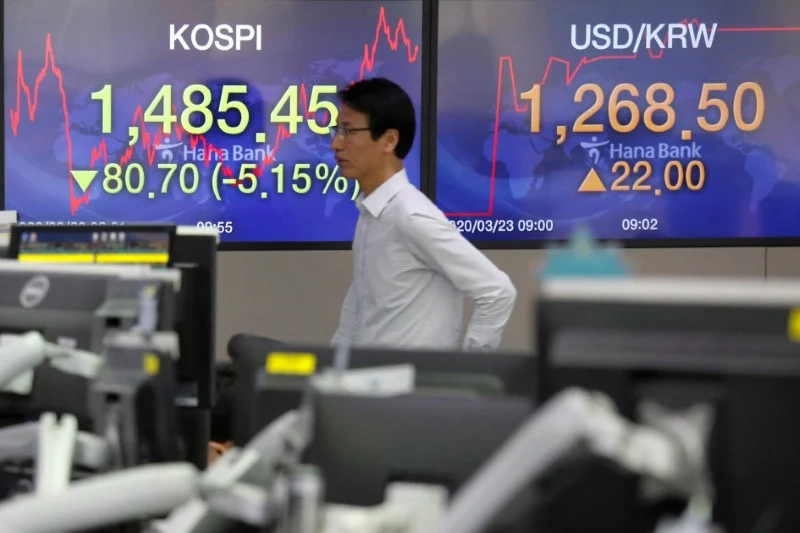
Foreign Investors Exit South Korean Stocks as AI Enthusiasm Fades
South Korea’s equity market is seeing heavy foreign outflows and a steep drop in trading a…
Read More