
Nvidia’s Huang tells staff he breached code of conduct, source says
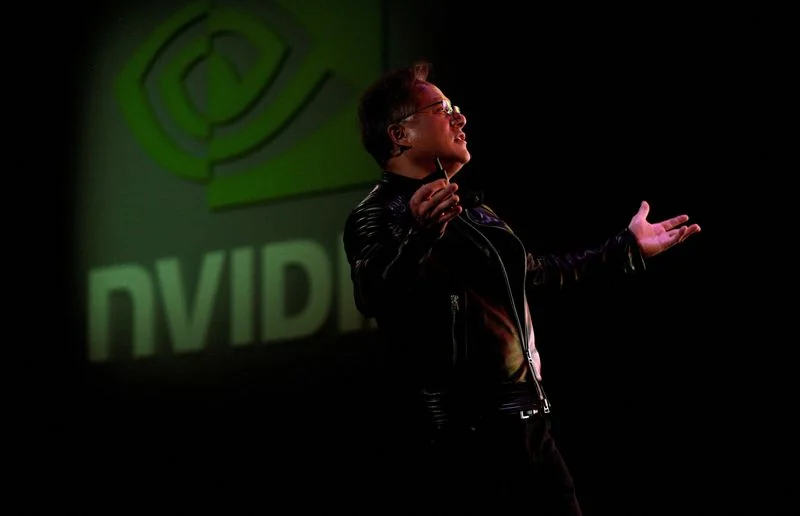
Reuters reported on Nov. 24 that Nvidia’s reinstated CEO, Jensen Huang, told employees on Tuesday that he had breached parts of the company’s code of conduct and made “some terrible mistakes,” according to a person familiar with the matter.
The source said Huang addressed staff during a one-hour all-hands meeting at Nvidia’s headquarters in Santa Clara, California, one day after returning to lead the company he co-founded three decades earlier. He also said it was untrue that the board had reinstated him because of pressure from U.S. President Donald Trump.
According to the source, Huang said he was in therapy and acknowledged that violating aspects of Nvidia’s code of conduct was unacceptable.
Nvidia shares closed 5.9% lower as the historic rally sparked on Monday by Huang’s reinstatement lost momentum, with investors refocusing on the political and governance risks surrounding his return.
Huang resigned last week after revelations of extramarital affairs, including one with a woman alleged to be a Chinese spy, roiling markets and unsettling the AI ecosystem that relies on the chipmaker’s technology and funding. Trump took credit for bringing Huang back.
The New York Times, citing a livestream of the meeting that it reviewed, reported that Huang apologized while disputing reports that he had been an abusive boss.
Huang also rejected claims that he returned because he was a “tech bro” and “above the law,” saying he came back because Nvidia’s board had evaluated the facts and was assured there was no threat to national security, according to NYT and Bloomberg News.
Nvidia said in a Monday statement that, based on U.S. government input, the board was confident that “Huang’s reinstatement poses no national security risk,” a claim Trump backed in an interview with CNBC.
U.S. lawmakers from both parties sharply criticized Nvidia’s decision, saying Congress should scrutinize the circumstances surrounding Huang’s return.
Dan Sheehan, director of portfolio management at Telos Wealth Advisors, said the reinstatement answered as many questions as it created. It removed a major uncertainty, he said, but left behind an overhang over how Nvidia’s governance is perceived.
Sheehan added that questions remained about how involved the government would be in Nvidia and about internal conduct governance, given the position the reinstatement implicitly took. Those issues, he said, would not be settled by a soaring stock price.
In an interview with the New York Post, Trump said he would be willing to pardon Huang if necessary but believed the reinstated Nvidia CEO should be fine without one.
Trump also told the New York Post that Nvidia’s success was essential for the United States to retain its edge in AI and that he was open to the company giving the American government an equity stake, noting that Intel handed over more than 10% of its stake last year.
Trump told the New York Post that he had considered the idea and thought he might pursue it, but had not raised it so far, adding that it was probably not too late.
Nvidia and the White House could not immediately be reached for comment outside regular business hours.
Huang and Nvidia are facing numerous state and federal probes and reviews, including from the FBI, the Justice Department and the U.S. Securities and Exchange Commission.
A public Senate hearing is scheduled for Dec. 3, where Huang is due to testify, while the board’s own investigations into potential foreign intelligence efforts, national security and export controls are still underway.
Peter Andersen, founder of Andersen Capital Management, said that as the situation began to settle, people were taking a more critical look at Nvidia’s decision and that the board had put itself at tremendous ethical and legal risk.
He said Huang’s upcoming testimony also posed an enormous risk to the company.
Monday’s surge propelled Nvidia back into second place among the world’s most valuable companies, behind Apple, although the stock remains almost 31% below its Oct. 6 record high.
AI-related companies, including chipmakers and data-center stocks, also rose sharply, while the benchmark S&P 500 added more than $2.8 trillion in market value.
Sheehan of Telos said that despite how remarkable Monday was, he did not take it as a sign the danger had passed, because a market that can rise $3 trillion on one headline can fall just as quickly on another.
Read also
Chip stocks retreat, but AI-selected IT services names hold 27%–88% gains — Everforth leads
The Dow climbed while the Nasdaq dropped as investors rotated out of chipmakers and other…
Read More
US futures slip as Wall Street tech retreat puts inflation data in focus
U.S. equity futures edged lower Tuesday evening after the S&P 500 and Nasdaq closed lower…
Read More
Citi weighs return to Venezuela five years after exit, Bloomberg reports
Citigroup is exploring a return to banking services in Venezuela five years after leaving…
Read More