
Taiwan, China and South Korea move to support markets after AI rout
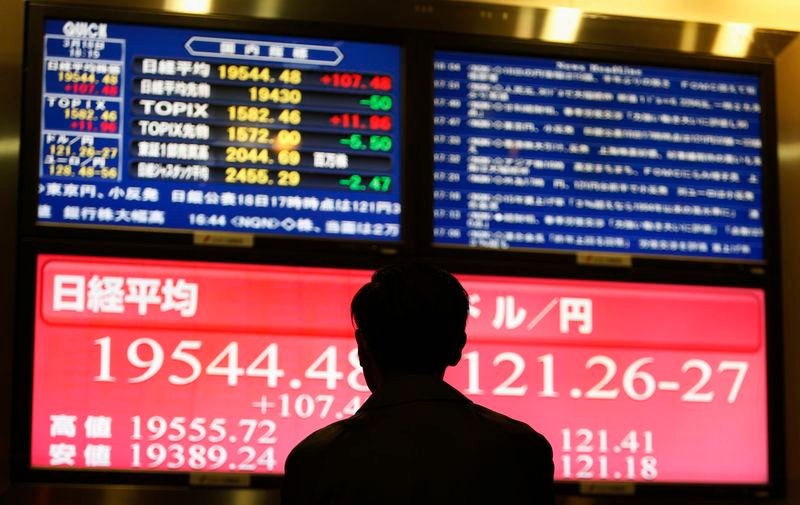
Taiwan, China and South Korea have rolled out measures aimed at shoring up financial markets following a punishing week for global equities, in which a selloff in the artificial intelligence trade damaged investor sentiment.
The AI trade was already under strain entering the week, weighed down by concerns over debt-fueled funding of AI infrastructure, uncertain returns on billions invested in the nascent technology, and regulatory fallout for the AI industry and data-center expansion after a sweeping Democratic victory in the U.S. midterms.
The AI trade could have rebounded this week on two major events: quarterly results from AI favorite Nvidia and a record-setting initial public offering by leading AI frontier lab Anthropic.
But an unprecedented governance crisis at Nvidia, which led to the surprise exit of chief executive Jensen Huang, eclipsed another strong earnings report. And although Anthropic surged in its market debut, the IPO did little to ease the concerns weighing on the broader AI trade.
The upshot was Wall Street’s weakest weekly showing since April 2025, ending with the benchmark S&P 500 slipping into correction territory. The AI boom has also delivered a huge lift to Taiwan and South Korea, home to some of the world’s largest contract chipmakers and semiconductor equipment makers. Their stock markets have swelled sharply in market value.
Taiwan’s Financial Regulatory Commission said Saturday that stocks had recently “continued to fluctuate sharply” and announced five measures to “maintain the order and stability of the securities market.”
Those steps include a full prohibition on short-selling below the prior trading day’s closing price and a change in the minimum margin to 150% from 130%. The commission acted after Taiwan’s benchmark index posted its worst weekly performance since August 1990.
South Korea, meanwhile, announced emergency measures on Sunday to steady its stock markets, including preparations for a market support fund and a temporary relaxation of restrictions on corporate share buybacks. The benchmark KOSPI fell more than 5% on Friday and has dropped nearly 47% from its latest record close in June.
In China, the Shanghai Stock Exchange and Shenzhen Stock Exchange on Sunday, with approval from the China Securities Regulatory Commission, introduced steps to support markets, including adjusting the financing margin ratio for investors buying securities to 80% from 100%. The Shanghai and Shenzhen indexes last closed at their lowest levels since July 2025 and June 2025, respectively.
Read also
‘Black Friday’ puts consumer spending in focus for AI-shaken market
Investors are turning to holiday consumer spending for signs of economic resilience as a s…
Read More
Saudi Stocks Close Lower; Tadawul All Share Down 1.95%
Saudi Arabian stocks closed lower on Sunday, with the Tadawul All Share falling 1.95% as r…
Read More
Correction or deeper reckoning? Investors look for signs US stock selling will ease
US stocks have entered a correction as the S&P 500 fell 11.6% from its October record, and…
Read More